ValoBot
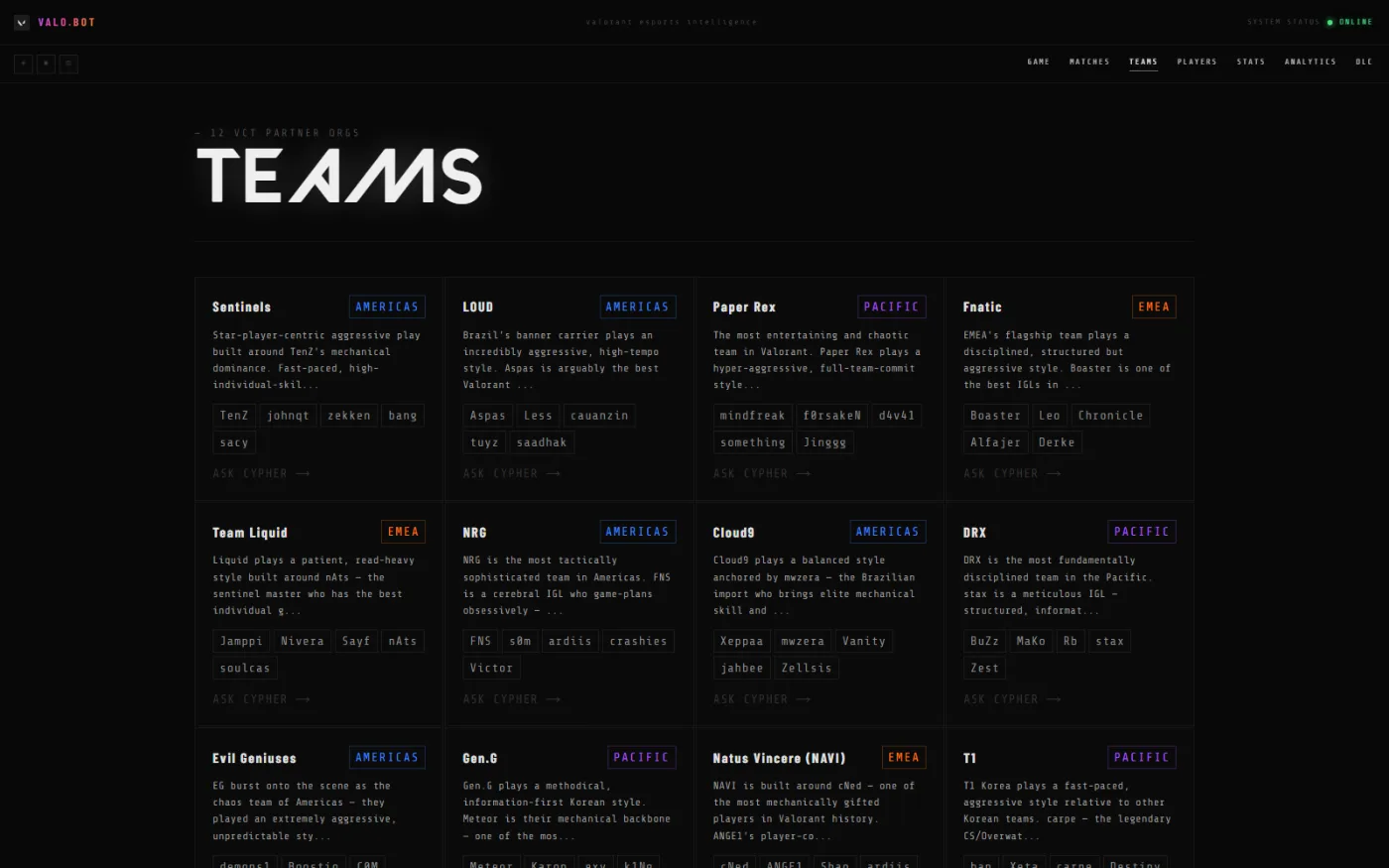
Valorant esports intelligence — live match, team and player data from VLR.gg, paired with CYPHER, an analyst grounded in it.
The second one is the point: when grounding fails, the refusal is the correct answer.
There is no route from the model to an answer that does not pass through fetched context.
The refusal is the feature
Most LLM products treat a failed retrieval as a degraded case and answer anyway from parametric memory. For esports that is worse than useless — a confident roster two transfer windows out of date reads exactly like a correct one.
CYPHER refuses to fabricate when the fetch fails. That is a product decision before it is an engineering one, and it is the reason anything else on the page can be trusted.
Where the data comes from
Results, fixtures, rosters and regional standings are scraped from VLR.gg rather than licensed, which makes the scraper the fragile part of the system and the thing most worth monitoring.
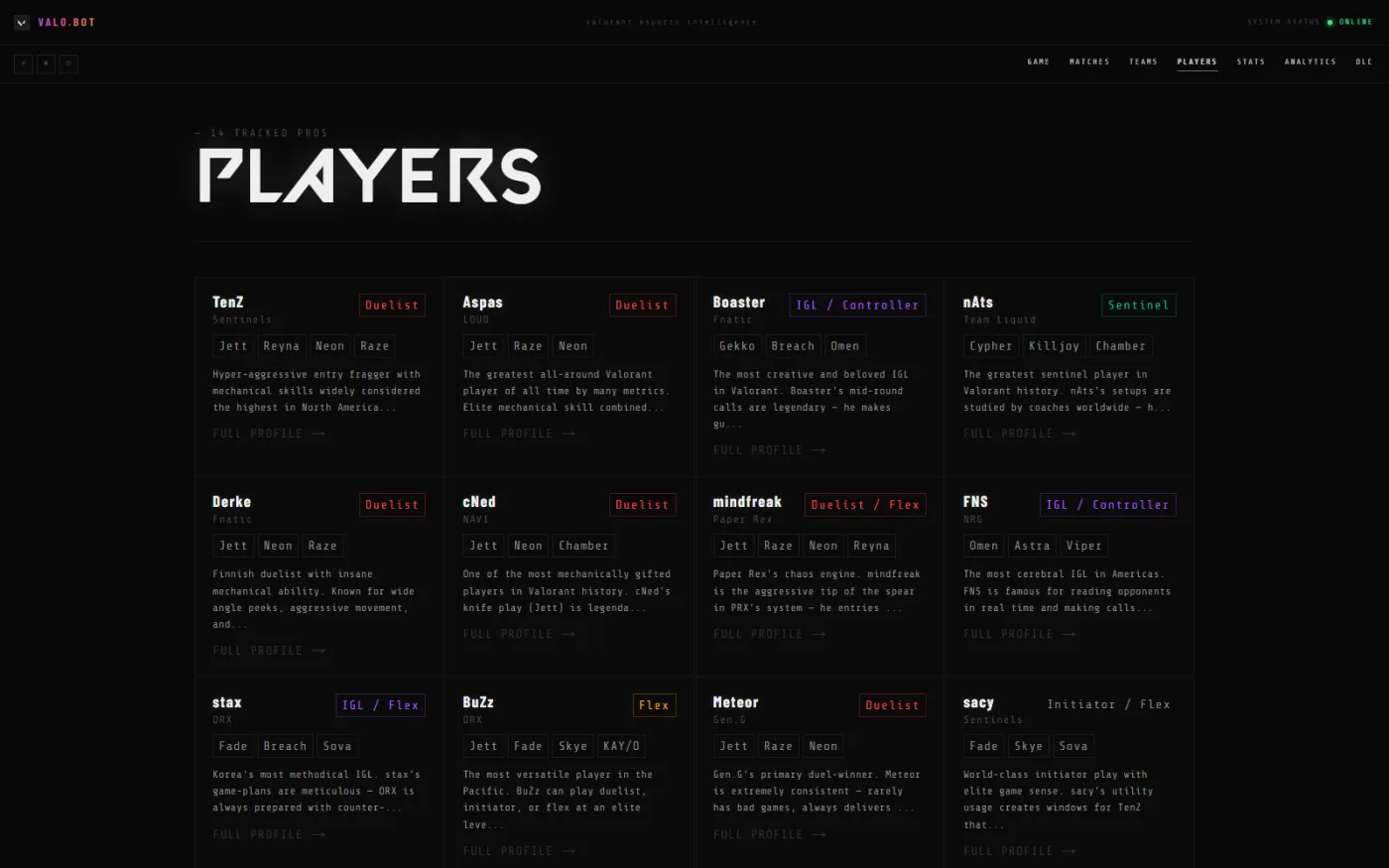
Playstyle summaries and per-player scouting blurbs are written by a model on top of that scraped base, and labelled as such.
ValoBot
An offline Android app where a small on-device language model rearranges a structured canvas through tool calls.
continue